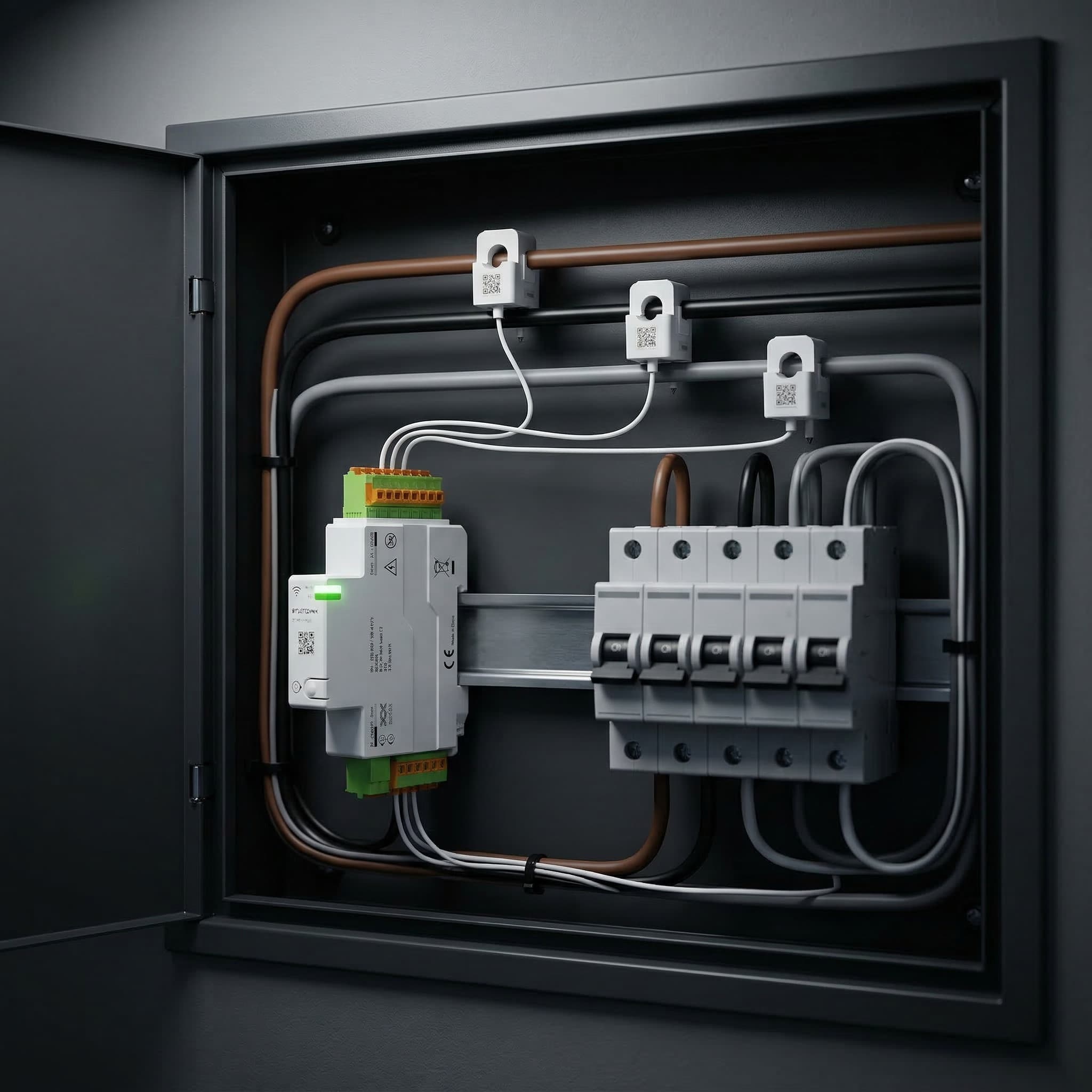
Smart power meters for AI energy management
Spark power meters give your energy system the real-time signal it needs to optimize solar, batteries, EV charging, and tariffs. Connected directly to SparkEdge and SparkGrid, measurement becomes action.
A power meter is where the AI stops guessing.
The meter is where the system learns what is really happening
Solar, battery storage, EV charging, and tariff optimization all depend on one thing: correct measurement of what is happening at the site right now. Without the meter, the EMS estimates. With the meter, it sees real import, export, load, and phase behavior — and can act on it.
For solar
A meter shows whether energy is being consumed locally or pushed back to the grid.
For batteries
A meter shows when the site is actually approaching a peak, importing too much, or exporting too much.
For EV charging
A meter provides the live headroom signal that makes dynamic load balancing possible.
For buildings and billing
A meter turns energy from a vague utility cost into something visible, allocatable, and optimizable.
Measurement is not an accessory. It is the sensing layer of the EMS.
A generic meter gives readings. Spark gives decisions.
A standard meter can show usage. A Spark-connected meter becomes part of a larger system that can analyze, compare, simulate, trigger rules, and support AI recommendations.
Generic meter
- —Measures energy
- —Shows data in one place
- —Stops at measurement
Spark meter
- Measures and feeds SparkEdge locally
- Feeds analytics, billing, automation, and optimization across the full ecosystem
- Enables export limiting, EV load balancing, tariff logic, and site-level insight
Two meter formats, one Spark ecosystem
Spark metering comes in two practical product families: one compact format for tight boards and embedded use, and one CT-based format for retrofit and main-feed measurement.
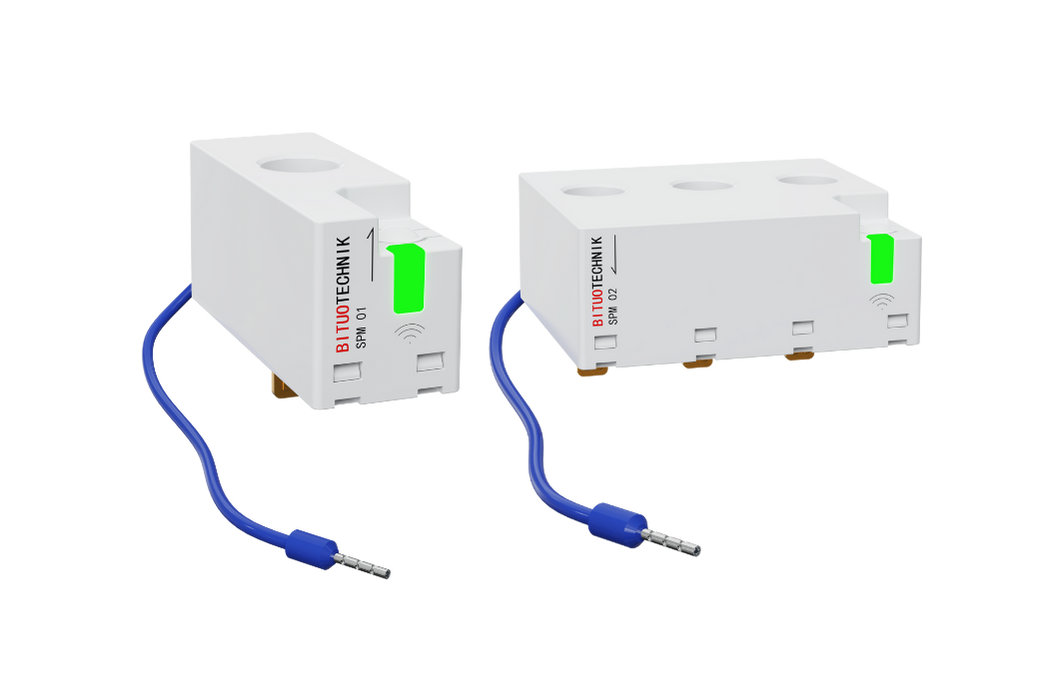
Spark Meter Mini
Ultra-compact metering for cabinets, OEM builds, and space-constrained installs
The small-footprint option for installations where space matters. Designed for final distribution boards and control boards, with no DIN rail space required, ±1% accuracy, bidirectional monitoring, and connectivity including Wi-Fi, Zigbee 3.0, Bluetooth, and Modbus RTU.
- Compact control boards
- Embedded / OEM projects
- Residential distribution boards
- Space-limited retrofits
- Export and load measurement close to the source
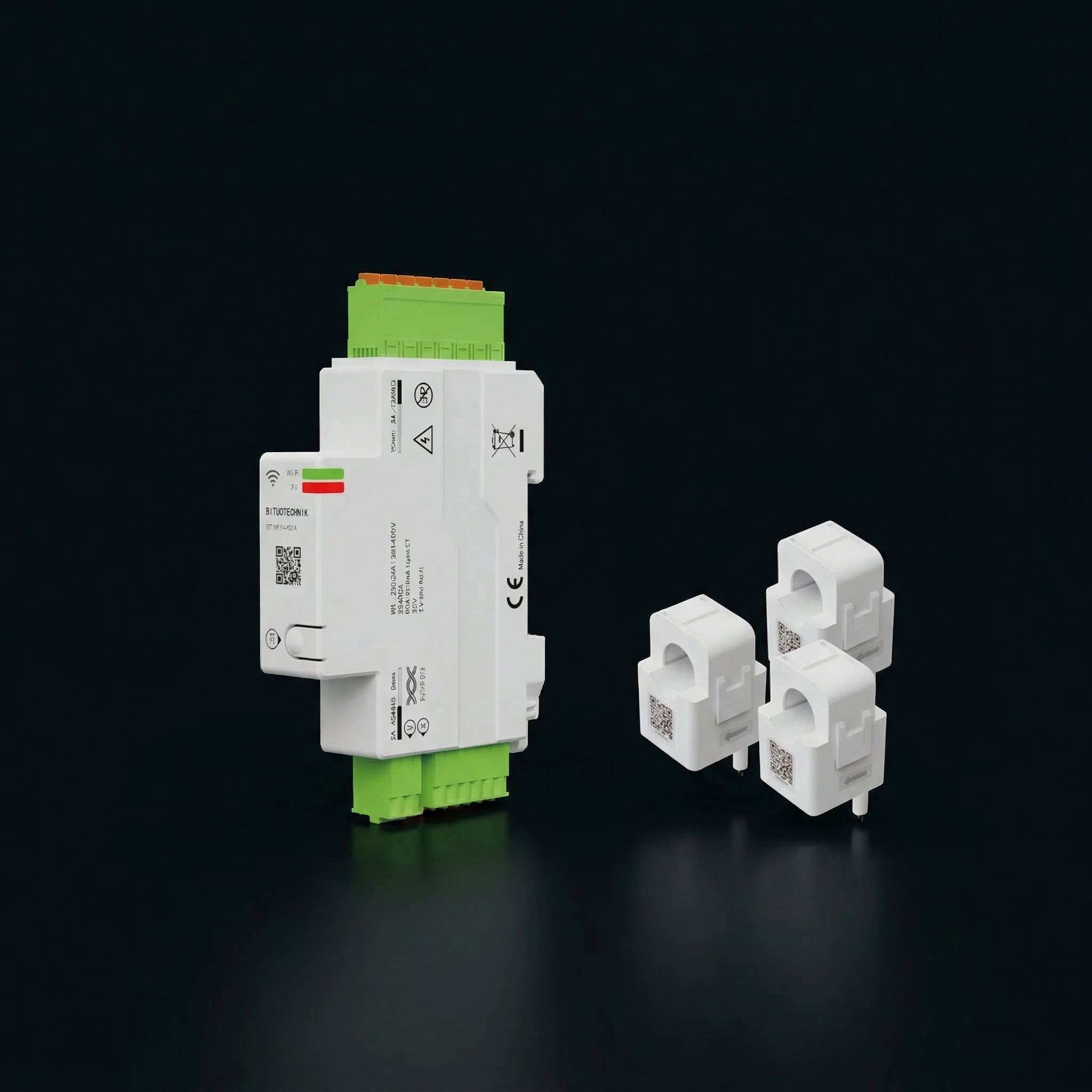
Spark Meter CT
Clamp-CT metering for retrofit installs, main incomers, and site-level control
The more flexible retrofit and panel option. Built around clamp CTs, supports 120 A / 200 A monitoring, combines wireless and RS485 communication, and is explicitly designed for solar export limitation, EV dynamic load balancing, and whole-home or site monitoring.
- Main incomer monitoring
- Retrofit installations
- Whole-home or whole-site measurement
- Solar export limitation
- EV dynamic load balancing
- Feeder and subpanel monitoring
What Spark adds on top of the meter
The hardware matters, but the bigger difference is what happens after installation. Spark meters do not live in isolation. SparkEdge and SparkGrid turn them into part of an AI-managed energy system.
SparkEdge integration
SparkEdge supports power meters as native device types and maps them through a JSON-based device model system and a protocol-agnostic Device Abstraction Layer.
Local intelligence
Meter data is available locally for dashboards, rules, health tracking, device pages, and historical analysis with Data Explorer.
SparkGrid analytics
Dedicated Power Meter Analytics with KPI overview, 3-phase analytics, billing-grade data, tariff block reporting, what-if scenarios, and diagnostics.
AI suggestions
SparkPilot surfaces anomaly detection, demand-management ideas, and price-optimization suggestions based on device data.
The meter measures the site. Spark turns that measurement into intelligence.
What the meter enables across the Spark ecosystem
The meter is the real-time source of truth that makes AI energy management work.
Solar export limiting
Bidirectional metering tells Spark when export is rising, so the system can react with storage, charging, or control logic.
EV dynamic load balancing
The meter gives Spark real-time import and load data, so EV charging can stay inside site limits.
Battery peak shaving
Real-time grid power is the signal that allows SparkEdge to trigger peak shaving and tariff-aware battery logic.
Whole-building monitoring
Measure import, export, phase balance, and critical circuits from one connected system.
Submetering and cost allocation
Use real data for tenants, departments, branches, or internal cost centers.
Anomaly detection
Let SparkPilot detect unusual consumption patterns, stale data, and optimization opportunities from meter data.
From measurement to billing, simulation, and optimization
SparkGrid already has the software layer to turn meter data into commercial decisions.
KPI overview
Track energy, average power, peak power, cost, CO2, daily profile, and time-block breakdown.
3-phase analytics
Live phase-level charts and heatmaps to understand how the site behaves over time.
What-if scenarios
Simulate peak caps and load-reduction strategies before applying them.
Billing-grade data
Daily totals, 15-minute intervals, tariff block breakdowns, data quality indicators, and cost reporting.
Data diagnostics
Inspect register metadata, missing data, and calculation method quality.
Exports and reports
Export data in Excel, CSV, or JSON and include it in scheduled multi-commodity reports.
A meter page should not end at kWh. Spark turns kWh into operational and financial insight.
One meter, many Spark use cases
Power meters are not a side product. They are the common signal layer that makes the entire Spark ecosystem more accurate, more automated, and more valuable.
The same meter data can support solar self-consumption, battery dispatch, EV charging control, tariff analytics, and site-level reporting inside one operating model.
Why choose Spark instead of just another smart meter
Choose Spark when you want the meter to be part of the future system, not just the current install.
Better local integration
SparkEdge already handles meter ingestion, dashboards, rules, and local storage.
Better analytics
SparkGrid already includes a strong metering analytics and billing layer.
Better automation
Meter data becomes a trigger for battery logic, EV logic, and AI suggestions.
Better future flexibility
Today the meter might support solar or EV charging. Tomorrow it can support batteries, fleet sites, or building energy workflows too.
Without intelligence, a meter just counts. With Spark, it drives every optimization decision.
Frequently Asked Questions
Because a meter gives you site-level truth: import, export, phase behavior, and load visibility that can be shared across solar, batteries, EV charging, billing, and AI optimization.
Choose Spark Meter Mini when board space is tight or you need embedded/OEM-style metering. Choose Spark Meter CT when you need retrofit-friendly clamp CT measurement, main-feed visibility, export limitation, or EV load balancing.
Yes. Both meter families support export limitation, and Spark's architecture can use that signal inside broader solar and battery workflows.
Yes. Real-time meter data is one of the key inputs for dynamic charging control.
Yes. SparkGrid supports billing-grade metering, 15-minute intervals, tariff context, time-block reporting, and exportable reports.
Yes. The same metering layer feeds future SparkEdge and SparkGrid use cases across solar, BESS, and EV charging.
Don't add another isolated meter. Add the signal layer for your AI energy system.
Spark power meters give your solar, battery, EV, and building energy workflows the real-time measurement they need to become smarter. Start with metering, and build the rest of the Spark ecosystem on top.