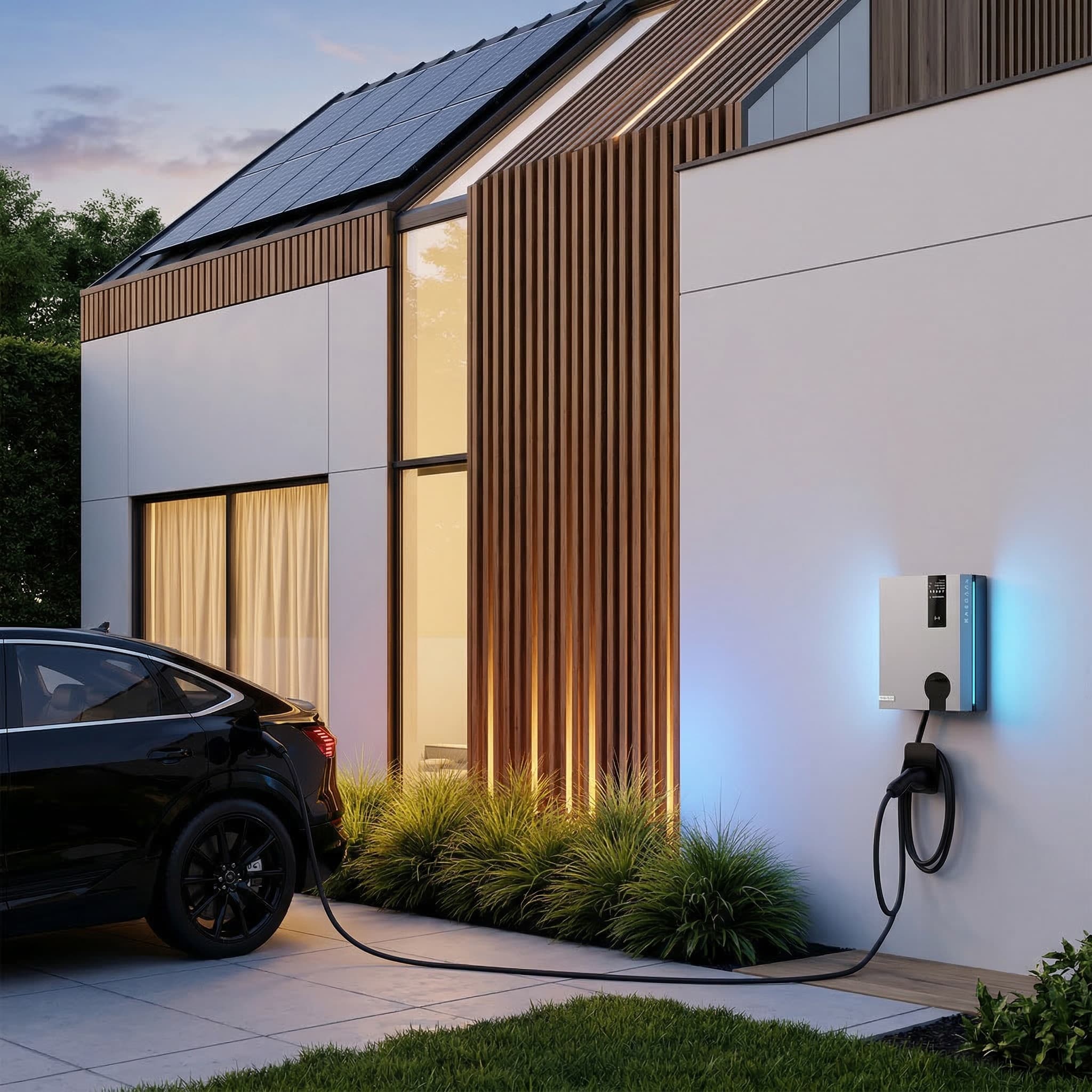
EV charging station with AI energy management
Spark Wallbox connects vehicle charging with your solar, battery, tariffs, and site limits through SparkEdge. You don't just charge fast — you charge at the right time, at the right cost.
You're not just buying a charger. You're buying smarter charging.
You can buy any charger. Few know how to charge smart.
The EV charger market is becoming more like the solar panel market: hardware is becoming similar, and the biggest difference is how well it integrates into the broader energy system. Spark goes a step further: the Wallbox isn't a standalone product — it's part of an AI EMS ecosystem where charging works together with solar, battery, meters, and home or business consumption.
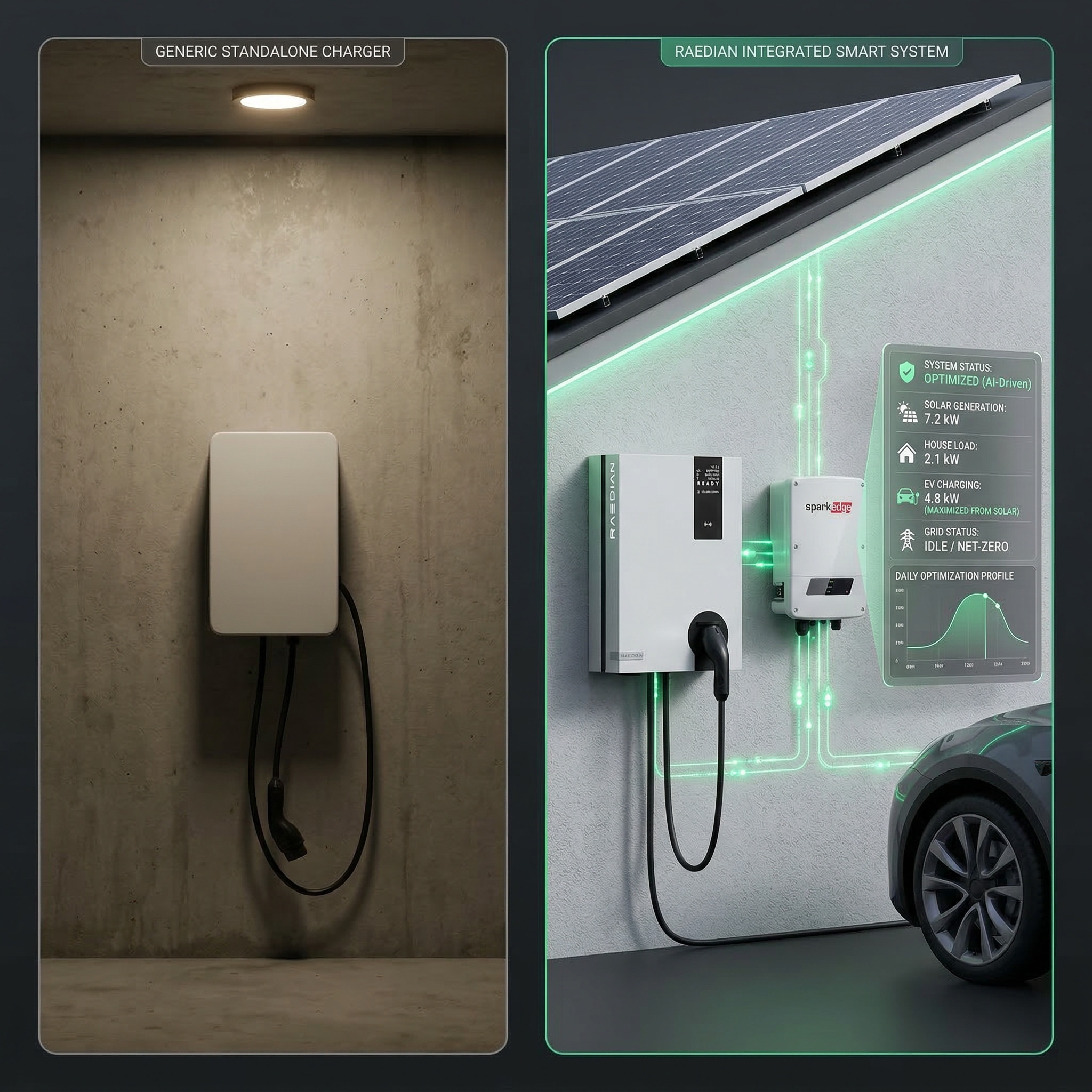
Standard EV charger
- —Charges the vehicle
- —Displays basic data
- —Has its own app
- —Doesn't coordinate the whole energy system
Spark Wallbox
- Charges up to 22 kW
- Adjusts power based on consumption
- Uses solar energy surplus
- Respects tariffs and grid limits
- Part of SparkEdge + SparkGrid AI system
Why standard EV charging is often not optimal
When an EV charger isn't connected to the building's energy system, charging often isn't aligned with available power, solar production, or current electricity prices.
Charging at the wrong time
The vehicle charges when energy is more expensive or when the building already has high loads.
Connection overload
Without dynamic management, EV charging can unnecessarily overload the home or business connection.
Lost solar surplus
Without proper integration, solar energy doesn't go where it has the most value — to the vehicle or battery.
Separate apps, separate logic
The charger, solar system, battery, and heat pump often each operate in their own world.
Tariffs and grid fees ignored
If the system doesn't account for tariff blocks and prices, charging isn't cost-optimized.
How Spark AI charging works
Wallbox charges up to 22 kW
Spark Wallbox supports single-phase charging up to 7.4 kW and three-phase charging up to 22 kW. Available with Type 2 cable, Type 2 socket, or Type 2 socket with shutter.
Locally measures and adjusts power
Wallbox uses CT clamps, RS-485, mobile app, and Spark EMS for dynamic power adjustment based on current consumption.
SparkEdge connects the entire system
On-site, the charger connects to solar inverters, battery, meters, and other devices, so EV charging is no longer an isolated function.
SparkGrid optimizes with AI logic
The system considers tariffs, solar forecasts, user habits, current consumption, and available energy to charge the vehicle at better times and at better costs.
The charger isn't just a plug for the vehicle — it's an active part of a smart energy system.
What Spark optimizes for EV charging
Spark Wallbox connects vehicle charging with local production, consumption, and tariffs in one intelligent system.
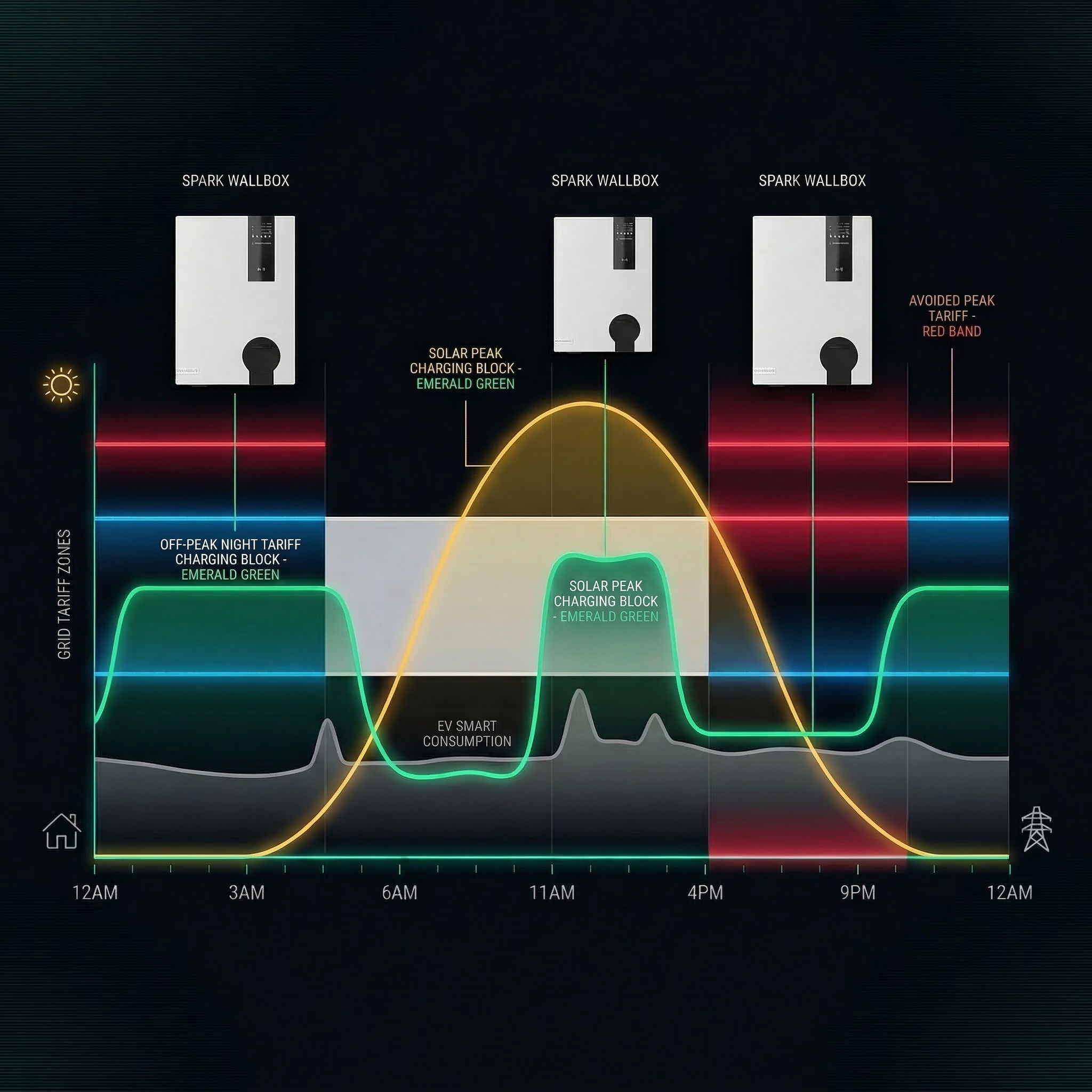
Dynamic load balancing
Charging power adjusts based on building consumption to prevent unnecessary overloads.
Solar charging
Spark Wallbox can use solar energy surplus for vehicle charging, connected with local EMS management.
Tariff optimization
Charging can be scheduled based on tariffs and the new grid fee system.
Multiple devices, one system
Wallbox isn't an island. It can be part of the logic together with solar, battery, heat pump, and meters.
Smart access management
RFID, app, and plug-and-charge modes provide better user control, especially with multiple users.
Future-ready
OCPP 1.6 JSON, OTA updates, and optional 4G/LoRa connectivity give the charger a more open, long-term position.
Why choose Spark instead of "yet another smart charger"
There are already many good EV chargers on the European market. Spark doesn't compete just on a feature checklist. Spark wins with the argument that the Wallbox is part of a broader AI energy management system — better solar utilization, better battery coordination, better cost control.
Charger + EMS in one ecosystem
Wallbox works with SparkEdge and SparkGrid, not just its own app.
Local control
Critical charging logic and limits run on-site, not only in the cloud. This is especially important for dynamic load management.
Better future upgradability
Today a Wallbox. Tomorrow add solar, battery, heat pump, additional meters, or broader automation.
Open connectivity
OCPP 1.6 JSON, OTA, and communication options mean a less locked system and more room to grow.
A charger is hardware. Spark is the reason its value increases over the years.
Meet the Spark Wallbox
Compact, sleek, and rugged EV charger designed for wall or pedestal mounting. With an OLED display, LED indicator, and IP55/IK10 protection, it's built for indoor and outdoor use.
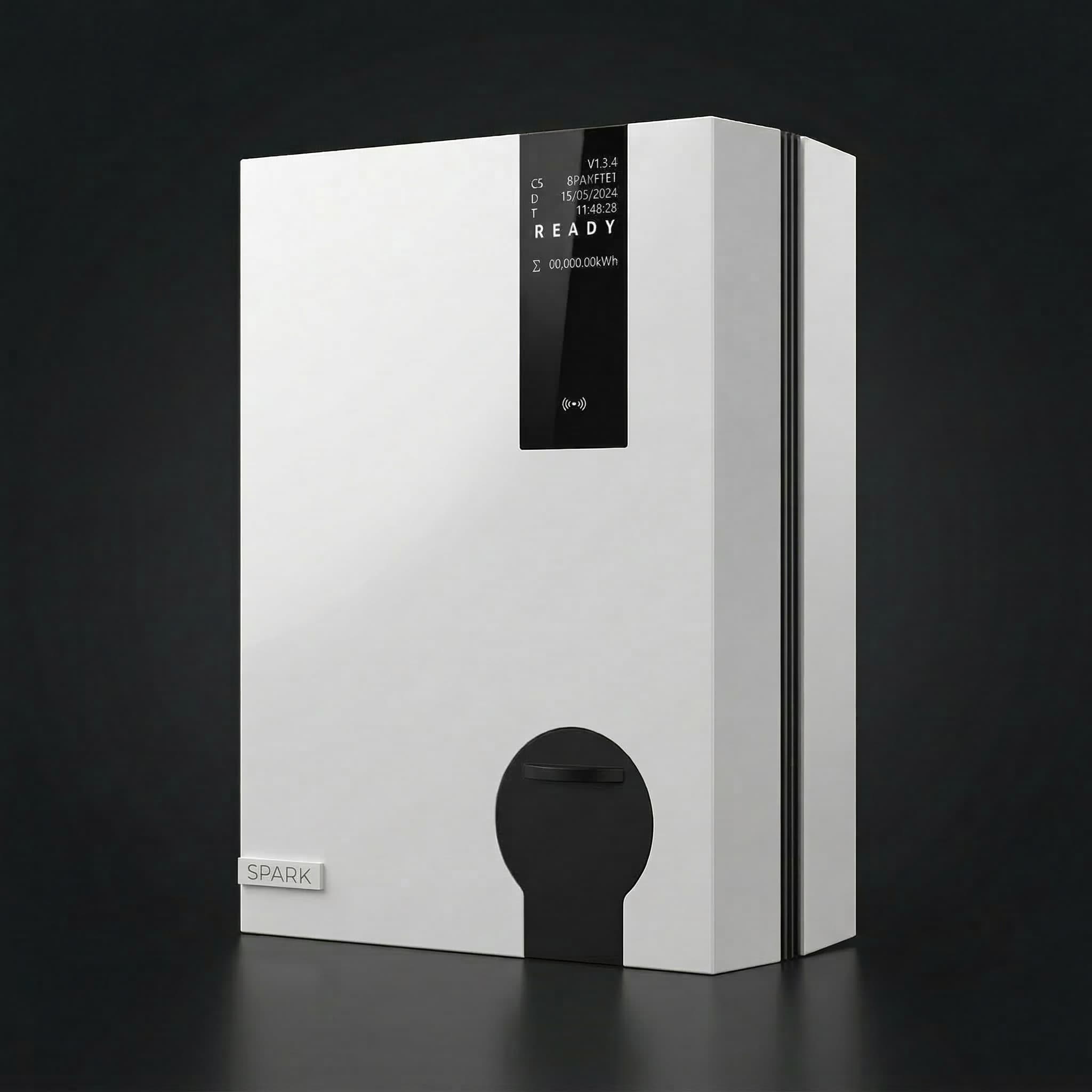
Key features of the Spark Wallbox
Modular housing, quick mounting — installation in just 15 minutes.
EV charger as part of a smart home or building
The biggest advantage of the Spark Wallbox isn't just the charger itself — it's the connection to the broader Spark system. Device monitoring and control, cost optimization with the new grid tariff system, adaptation based on weather and habits, and real-time consumption and cost monitoring.
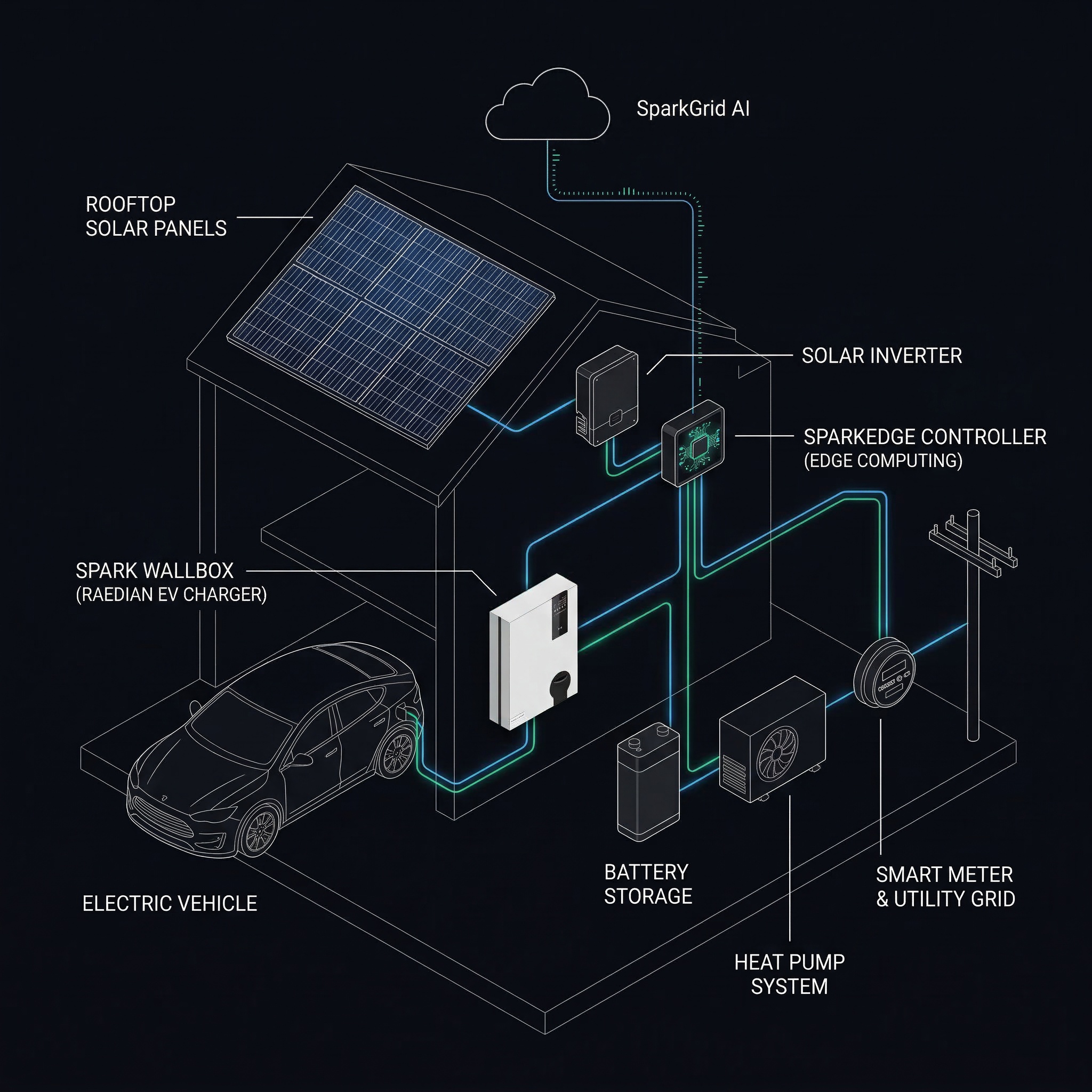
Today you can buy an EV charger. With Spark, you buy charging that's ready for the future energy system.
For homes, multiple vehicles, and smart locations
Home with solar
Charge your vehicle with solar surplus for maximum self-consumption.
Home with EV and heat pump
Better coordination of major loads in the same system without overloads.
Family with multiple vehicles
Better control over power and costs with multiple simultaneous charging sessions.
Small business locations
RFID, app control, OCPP 1.6, wall or pedestal mount, and load management for multi-user scenarios.
Full control over charging, consumption, and costs
Spark Wallbox provides a mobile app for charging scheduling, consumption monitoring, and history, plus a broader EMS view of consumption and costs in real time. You don't just see how much is charging — you see when it's smartest to charge and how to reduce costs.
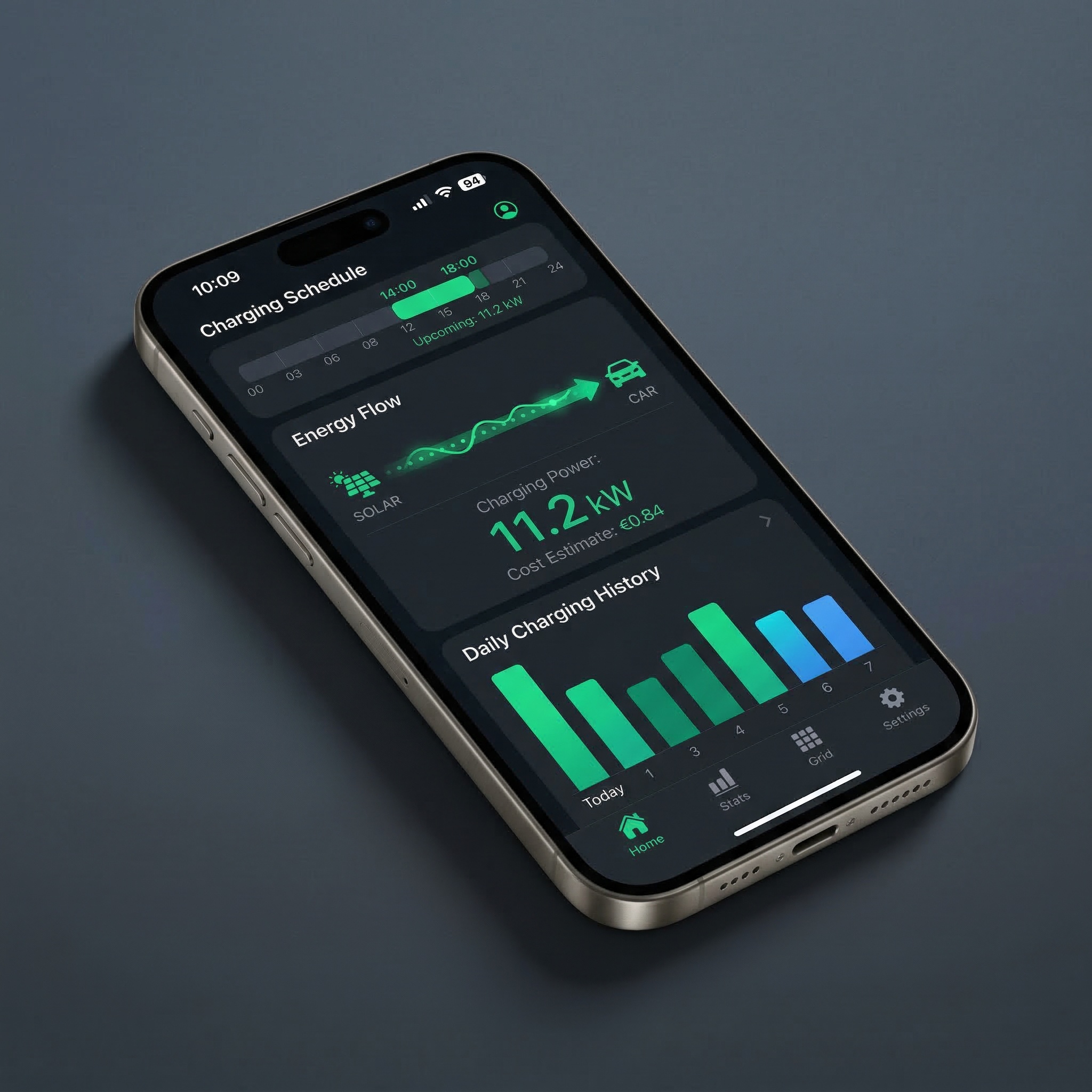
Charging scheduling
Set charging schedules based on your habits, tariffs, and available solar energy.
Consumption overview
Monitor current building and charger consumption in real time.
Charging history
Review past charging sessions, energy consumed, and costs.
Real-time cost insight
See how much charging costs based on current tariffs and grid fees.
Solar surplus to EV
Track how much solar energy goes directly into vehicle charging.
AI suggestions and optimization
Spark system suggests better charging times and optimizes costs across the entire Spark ecosystem.
Frequently Asked Questions
The primary story is very residential, but technical features like RFID, OCPP 1.6 JSON, wall or pedestal mount, and load management also enable more advanced use cases.
Yes. The Wallbox explicitly supports solar energy integration and using solar surplus for vehicle charging.
Yes. Dynamic load balancing is one of the key product features. It uses load management, CT clamps, and RS-485.
Yes. The system specifically supports the grid tariff billing system and scheduling charging based on provider tariffs.
Wi-Fi, BLE, CT clamps, RS-485, and optionally LoRa and 4G. Authentication via RFID, app, or plug-and-charge.
Yes. The Wallbox has IP55 and IK10 protection and is suitable for both indoor and outdoor use.
Don't just buy an EV charger. Buy smarter charging.
Spark Wallbox connects charging speed, solar energy, tariff optimization, and local control into one system. Your vehicle doesn't just consume electricity — it uses energy smarter.